
Potential advantages
Strong shelf presence; large printable faces; lightweight shipping; optional reclosure; multiple shapes and finishes.
A shelf-ready flexible pack built around a bottom gusset that opens into a stable base. Stand-up pouches combine a flexible body with a formed base. Depending on the design, they may include a press-to-close zipper, tear notch, hang hole, spout or other convenience feature. They are often selected when shelf presentation, lower pack weight and adaptable graphics matter.
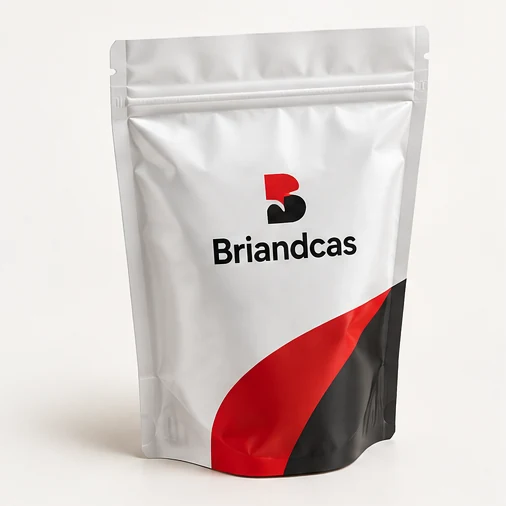
A stand-up pouch is easiest to recognise by its broad front face and the folded base that opens when filled.
The mock-up shows the overall silhouette; the schematic below explains the hidden gusset, seal zones and artwork considerations. This is a conceptual visual, not a production sample or approved dieline.
Schematic only; not to scale. Final material construction, dimensions, seals, closures and print zones must come from the selected packaging converter.
Stand-up pouches combine a flexible body with a formed base. Depending on the design, they may include a press-to-close zipper, tear notch, hang hole, spout or other convenience feature. They are often selected when shelf presentation, lower pack weight and adaptable graphics matter.
Common component roles are described below for learning. They are not a recommended bill of materials for every product or supplier.
| Component / layer | Typical role and specification questions |
|---|---|
| Outer print web | Provides print surface, stiffness and scuff resistance; often a polyester or oriented polypropylene film. |
| Optional barrier web | A selected layer may reduce oxygen, moisture or light transmission. The exact barrier target depends on the product. |
| Sealant / inner web | Contacts the product where specified and forms heat seals; must be compatible with filling conditions and contents. |
Snacks, dry foods, coffee, pet treats, powders, personal-care refills and selected liquid products when the correct structure and closure are specified.
Strong shelf presence; large printable faces; lightweight shipping; optional reclosure; multiple shapes and finishes.
Requires suitable filling and sealing equipment; gusset performance depends on fill weight and product distribution; laminates may complicate recycling; corners and seals need validation.
Define the product’s sensitivity to moisture, oxygen, light, aroma, contamination, impact or leakage where relevant.
Confirm filling equipment, speed, sealing method, machine compatibility, pack orientation and expected production volume.
Consider transport, stacking, shelf presentation, opening, carrying, reclosure and local end-of-life realities.
Keep logos, mandatory text and key product imagery away from gussets, seal zones, zipper tracks, tear notches and any supplier-defined non-print areas. Ask whether the artwork is viewed from the outside or reverse-printed between layers.
No. A zipper is optional. Some pouches are designed for one-time opening; others use a zipper, slider or spout.
Potentially, if the pack size, seal integrity, moisture protection, handling and distribution requirements are validated with the converter. A paper sack may be more suitable for some weights and supply chains.
Use it only for early concept exploration. Production artwork should be built on the current dieline supplied for the actual construction and machine.
This guide is educational and is not a substitute for packaging engineering, product testing, food-contact review or current regulatory advice. Confirm applicable Kenyan and destination-market requirements with the responsible product owner and qualified specialists.
Share the product, target pack size, filling method, reference images and converter specification. Briandcas can help scope the design and prepress requirements.