
Potential advantages
Convenient dispensing; lower pack weight than many rigid alternatives; can be shaped for storage and use; potential refill application.
Flexible packs fitted with a spout and closure for controlled dispensing of suitable liquids, gels or pastes. A spouted pouch combines a flexible body with a fitment—usually a spout and cap—welded or otherwise integrated into the pack. Fitment position, filling method, product viscosity and the required seal integrity all influence the final construction.
A spouted pouch adds a rigid fitment and cap to a flexible body to support controlled pouring or dispensing.
Fitment position, seal integrity, material compatibility and the filling process must be confirmed with the converter. This is a conceptual visual, not a production sample or approved dieline.
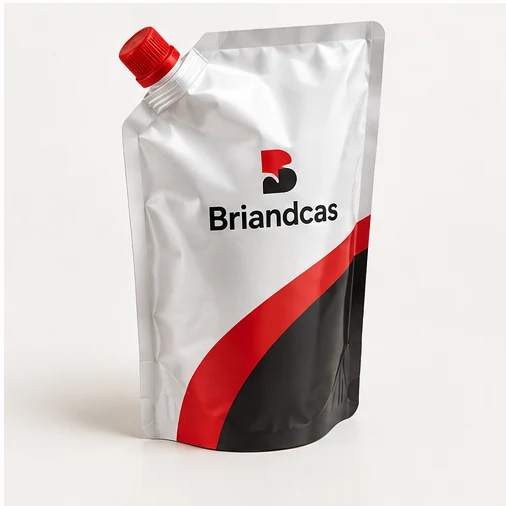
Schematic only; not to scale. Final material construction, dimensions, seals, closures and print zones must come from the selected packaging converter.
A spouted pouch combines a flexible body with a fitment—usually a spout and cap—welded or otherwise integrated into the pack. Fitment position, filling method, product viscosity and the required seal integrity all influence the final construction.
Common component roles are described below for learning. They are not a recommended bill of materials for every product or supplier.
| Component / layer | Typical role and specification questions |
|---|---|
| Outer print web | Provides branding and abrasion resistance. |
| Barrier or structural layers | Chosen for the product’s chemical compatibility, light/oxygen/moisture needs and handling. |
| Inner contact layer | Must be suitable for the contents and compatible with sealing and fitment integration. |
Selected beverages, sauces, purees, concentrates, detergents, personal-care liquids and refill products—subject to compatibility and regulatory checks.
Convenient dispensing; lower pack weight than many rigid alternatives; can be shaped for storage and use; potential refill application.
Fitment interface can be a failure point; not every liquid is compatible with every structure; leakage and drop performance must be tested.
Define the product’s sensitivity to moisture, oxygen, light, aroma, contamination, impact or leakage where relevant.
Confirm filling equipment, speed, sealing method, machine compatibility, pack orientation and expected production volume.
Consider transport, stacking, shelf presentation, opening, carrying, reclosure and local end-of-life realities.
Reserve a clear no-print/clearance zone around the fitment, flange and cap. Confirm the viewing orientation, fill method and whether the fitment is applied before or after filling.
No. Product chemistry, viscosity, temperature, fitment material and sealing process determine compatibility.
Placement is constrained by filling equipment, pouch geometry, seal zones and handling requirements.
No. Recyclability depends on the full material and fitment combination and the collection/recycling systems available in the target market.
This guide is educational and is not a substitute for packaging engineering, product testing, food-contact review or current regulatory advice. Confirm applicable Kenyan and destination-market requirements with the responsible product owner and qualified specialists.
Share the product, target pack size, filling method, reference images and converter specification. Briandcas can help scope the design and prepress requirements.