
Potential advantages
Portion control; compact transport; high-volume production potential; low material per individual pack in some applications.
Compact sealed packs formed from flexible web or sheet material for single-use or measured portions. A three-side-seal pouch is made by sealing three edges around a product cavity, with the remaining edge used for filling and then sealed. “Sachet” describes a broad small-pack format rather than one single construction. Sachets can be made from one web folded over or two webs, depending on the converting line.
A sachet is a compact, mostly flat pack formed by sealing flexible material around a measured portion.
The illustration is a visual starting point; actual seal layout and whether the pouch uses three- or four-side sealing depend on the converter’s construction. This is a conceptual visual, not a production sample or approved dieline.
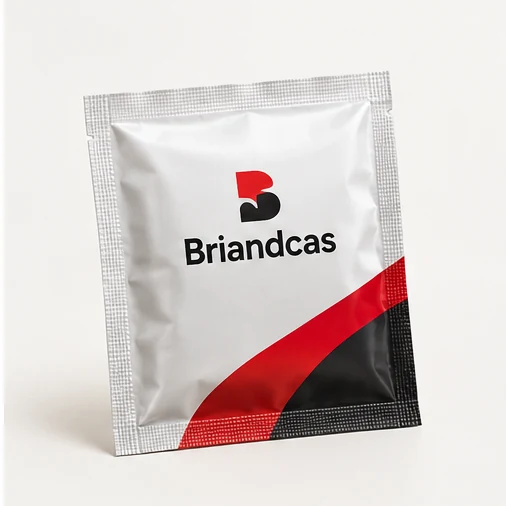
Schematic only; not to scale. Final material construction, dimensions, seals, closures and print zones must come from the selected packaging converter.
A three-side-seal pouch is made by sealing three edges around a product cavity, with the remaining edge used for filling and then sealed. “Sachet” describes a broad small-pack format rather than one single construction. Sachets can be made from one web folded over or two webs, depending on the converting line.
Common component roles are described below for learning. They are not a recommended bill of materials for every product or supplier.
| Component / layer | Typical role and specification questions |
|---|---|
| Print layer | May be surface printed or reverse printed depending on construction and process. |
| Barrier / support layer | Chosen according to product sensitivity and converting needs. |
| Heat-seal layer | Allows the perimeter to seal under validated time, temperature and pressure conditions. |
Seasonings, sauces, condiments, personal-care samples, powders, single-use portions and small-format promotional packs.
Portion control; compact transport; high-volume production potential; low material per individual pack in some applications.
Limited reclosure; small space for legible copy; difficult opening if notch and material are poorly matched; very dependent on filling-line settings.
Define the product’s sensitivity to moisture, oxygen, light, aroma, contamination, impact or leakage where relevant.
Confirm filling equipment, speed, sealing method, machine compatibility, pack orientation and expected production volume.
Consider transport, stacking, shelf presentation, opening, carrying, reclosure and local end-of-life realities.
Prioritise the product name, variant, mandatory information and brand mark. On very small packs, confirm minimum type size and barcode feasibility before finalising the layout.
Many are, but format and usage depend on the product and closure. Most simple three-side-seal sachets are not designed for reclosure.
It defines how the artwork repeats along the web and must match the converter’s cutting and registration system.
Not always. Available space, print quality and scanning requirements need to be checked early.
This guide is educational and is not a substitute for packaging engineering, product testing, food-contact review or current regulatory advice. Confirm applicable Kenyan and destination-market requirements with the responsible product owner and qualified specialists.
Share the product, target pack size, filling method, reference images and converter specification. Briandcas can help scope the design and prepress requirements.