
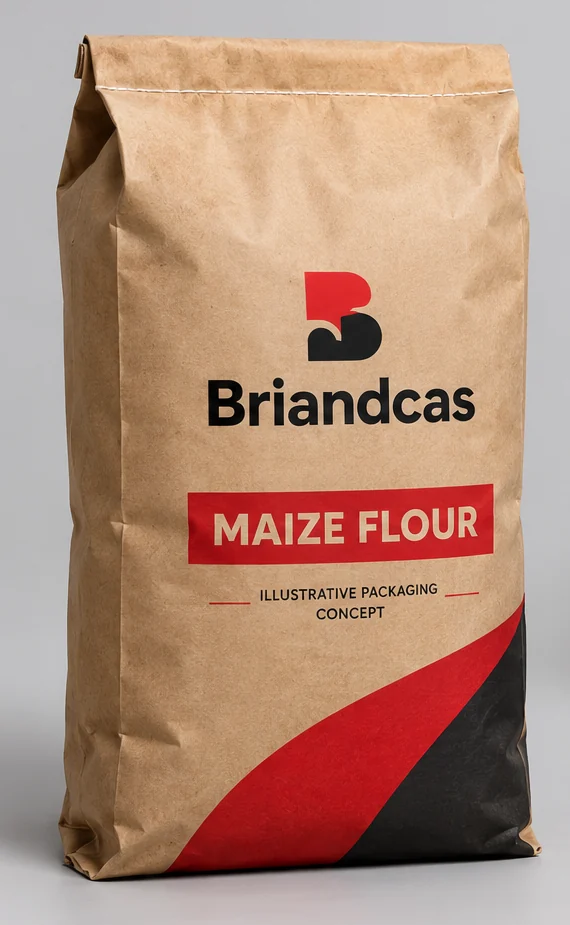
Kraft paper sack
Paper-based construction; may use multiple plies and, where required, a suitable liner or barrier. Confirm strength, moisture needs and food-contact suitability with the supplier.
Start with the physical package, then explore how the materials and artwork work together. These Briandcas-branded visuals are illustrative concepts, not approved production specifications.
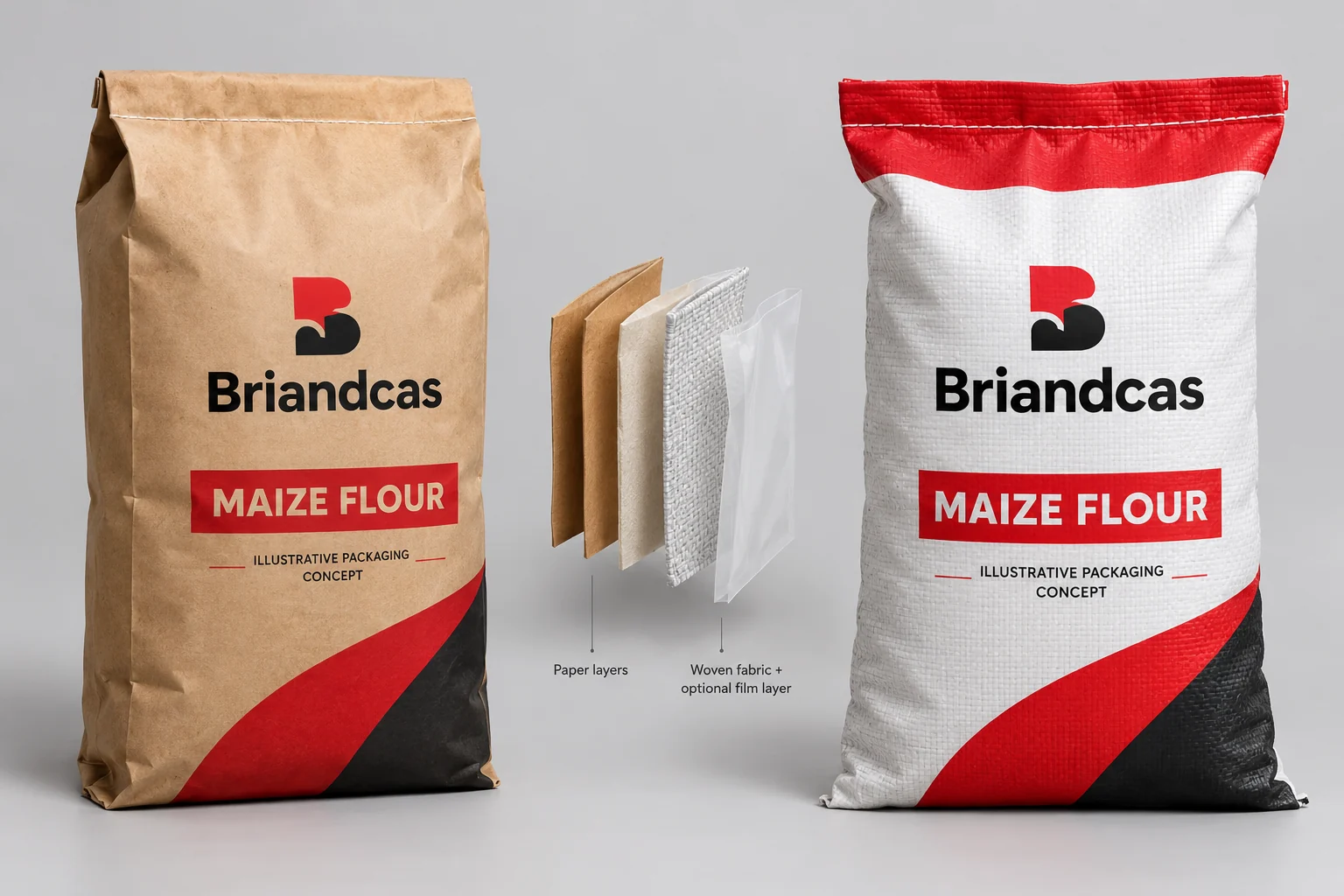
Paper-based construction; may use multiple plies and, where required, a suitable liner or barrier. Confirm strength, moisture needs and food-contact suitability with the supplier.
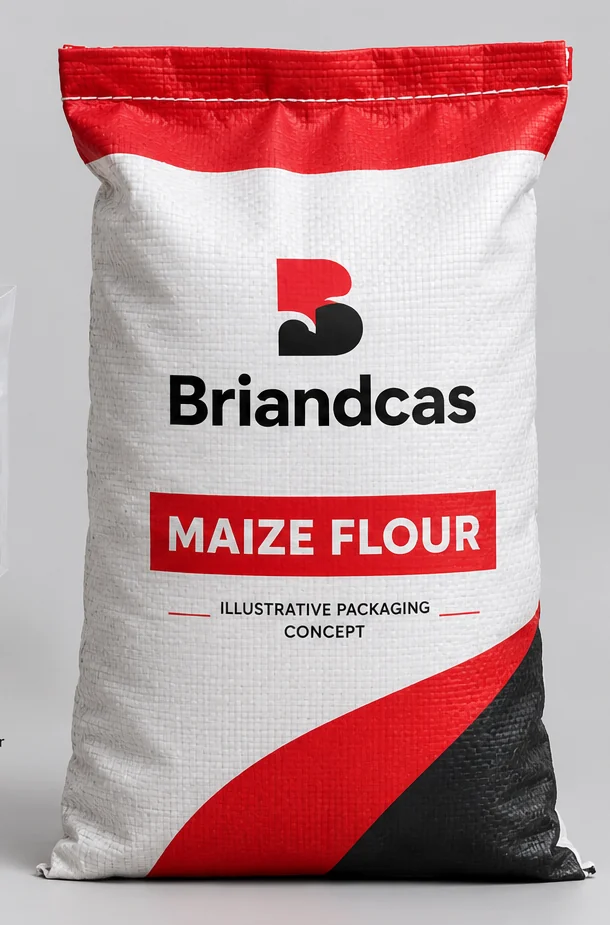
Woven fabric provides strength; optional lamination or an inner liner may be considered for print quality or additional moisture management. Validate the full structure and seals.
Important: printed branding in these concept images is an approximation. Use the official Briandcas SVG logo in final artwork, and have the packaging converter confirm dimensions, seams, material layers and print template before production.
Paper formats used for carrying, wrapping, grouping and presenting products, from simple bags to printed sleeves. Paper bags, wraps and sleeves cover a wide range of constructions. A shopping bag, bakery wrap and product sleeve do not share the same strength or barrier requirements. Paper grade, fibre direction, handle or seam design, coatings, adhesives and exposure to grease or moisture all affect suitability.
Schematic only; not to scale. Final material construction, dimensions, seals, closures and print zones must come from the selected packaging converter.
Paper bags, wraps and sleeves cover a wide range of constructions. A shopping bag, bakery wrap and product sleeve do not share the same strength or barrier requirements. Paper grade, fibre direction, handle or seam design, coatings, adhesives and exposure to grease or moisture all affect suitability.
Common component roles are described below for learning. They are not a recommended bill of materials for every product or supplier.
| Component / layer | Typical role and specification questions |
|---|---|
| Paper grade | Selected for stiffness, surface, strength, absorbency and print performance. |
| Coating / barrier if used | May address specific grease or moisture needs; compatibility and recovery claims must be assessed. |
| Ink / adhesive | Must suit the paper, intended use and converting method. |
Retail carry bags, bakery and takeaway wraps, product sleeves, promotional packaging and secondary presentation applications when the selected grade is appropriate.
Tactile paper appearance; printable surface; flexible sizes and shapes; can be supplied flat for storage.
Paper strength and barrier vary; grease or moisture may affect performance; handles and seams can fail if under-specified.
Define the product’s sensitivity to moisture, oxygen, light, aroma, contamination, impact or leakage where relevant.
Confirm filling equipment, speed, sealing method, machine compatibility, pack orientation and expected production volume.
Consider transport, stacking, shelf presentation, opening, carrying, reclosure and local end-of-life realities.
Request a structural drawing and sample if folds, handles or sleeve overlaps affect the design. Keep important copy away from seams, adhesive zones, folds and handle cut-outs.
No. The complete material, inks/coatings where relevant and intended contact conditions must be suitable.
Only if the product and distribution requirements can be met. Paper alone may not provide the required moisture, grease or oxygen protection.
Some sleeves are only presentation components and rely on an inner pack or product geometry; confirm the intended structural role.
This guide is educational and is not a substitute for packaging engineering, product testing, food-contact review or current regulatory advice. Confirm applicable Kenyan and destination-market requirements with the responsible product owner and qualified specialists.
Share the product, target pack size, filling method, reference images and converter specification. Briandcas can help scope the design and prepress requirements.