
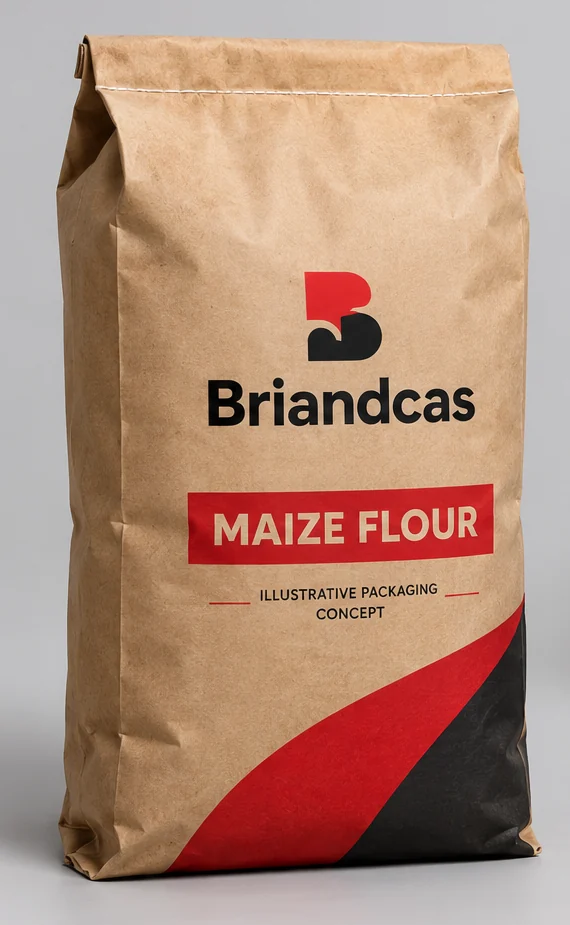
Kraft paper sack
Paper-based construction; may use multiple plies and, where required, a suitable liner or barrier. Confirm strength, moisture needs and food-contact suitability with the supplier.
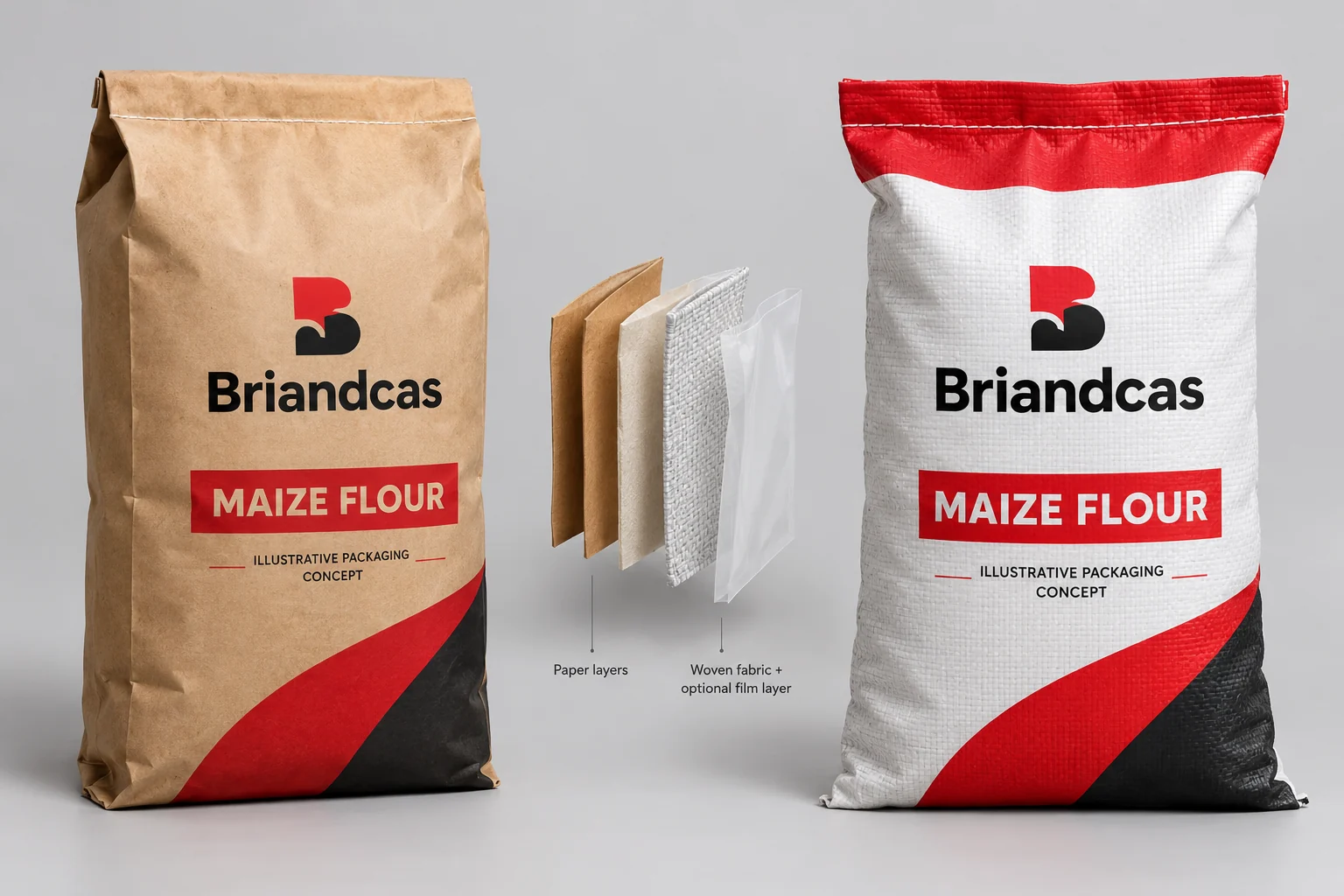
Start with the physical package, then explore how the materials and artwork work together. These Briandcas-branded visuals are illustrative concepts, not approved production specifications.
Paper-based construction; may use multiple plies and, where required, a suitable liner or barrier. Confirm strength, moisture needs and food-contact suitability with the supplier.
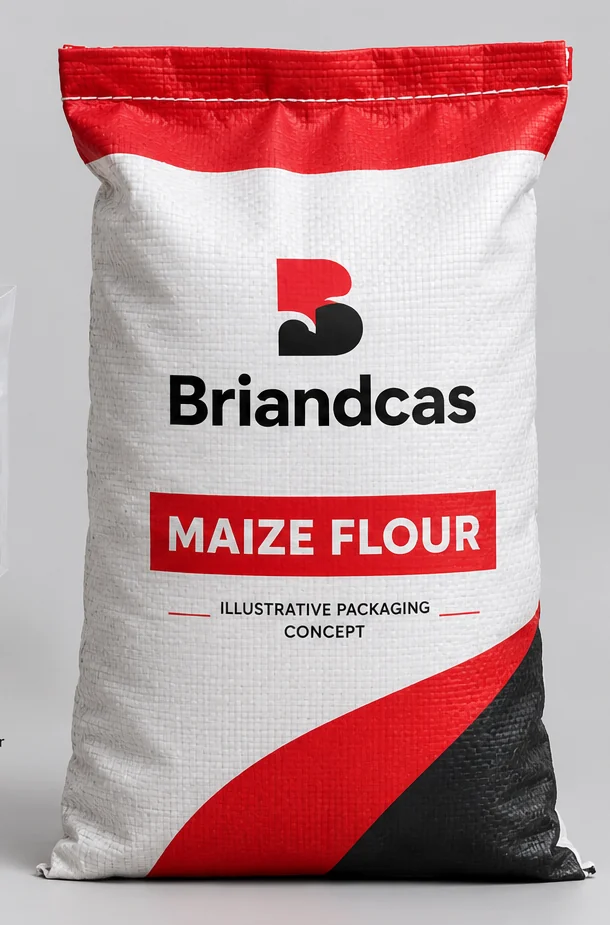
Woven fabric provides strength; optional lamination or an inner liner may be considered for print quality or additional moisture management. Validate the full structure and seals.
Important: printed branding in these concept images is an approximation. Use the official Briandcas SVG logo in final artwork, and have the packaging converter confirm dimensions, seams, material layers and print template before production.
A paper-based bag or sack for flour and other dry staple products, specified around filling, moisture exposure and distribution. Maize flour packaging must balance product protection, pack strength, handling, legible product information and the realities of storage and distribution. “Paper sack” can describe several structures, from a simple paper bag to a multiwall sack or a paper-based pack with a functional liner. The right choice must be confirmed against the product and filling system.
Schematic only; not to scale. Final material construction, dimensions, seals, closures and print zones must come from the selected packaging converter.
Maize flour packaging must balance product protection, pack strength, handling, legible product information and the realities of storage and distribution. “Paper sack” can describe several structures, from a simple paper bag to a multiwall sack or a paper-based pack with a functional liner. The right choice must be confirmed against the product and filling system.
Common component roles are described below for learning. They are not a recommended bill of materials for every product or supplier.
| Component / layer | Typical role and specification questions |
|---|---|
| Printed outer paper | Provides the visible brand surface and can support communication; paper grade and finish affect print appearance and durability. |
| Paper plies | Multiple plies may improve strength and puncture resistance. Ply count alone does not define performance. |
| Optional liner / barrier | A polymer liner or coating may improve selected barrier properties, but its material and end-of-life implications need checking. |
| Adhesive / closure system | The seam, paste, stitch or liner closure must suit the filling line and handling demands. |
Retail or institutional packs of maize flour and other dry milled products where a paper-based sack is appropriate and the supplier can validate protection and strength.
Paper-based shelf appearance; broad printable surface; potential multi-ply strength; familiar handling and stacking formats.
Paper can be sensitive to moisture; flour dust can contaminate closure areas; performance varies by paper grade, ply structure, seams, liner and storage conditions.
Define the product’s sensitivity to moisture, oxygen, light, aroma, contamination, impact or leakage where relevant.
Confirm filling equipment, speed, sealing method, machine compatibility, pack orientation and expected production volume.
Consider transport, stacking, shelf presentation, opening, carrying, reclosure and local end-of-life realities.
“Paper packaging” is not one specification. A pack’s performance depends on the paper grade, number and orientation of plies, seams, closure, optional functional layers, filled weight and the journey from filling line to customer. The profiles below are discussion starting points—not universal recommendations.
| Construction family | Typical role | Questions to resolve | Important caution |
|---|---|---|---|
| Single-ply paper bag | Simple, lighter-duty dry-product presentation where the pack and distribution conditions allow it. | Paper grade, bag dimensions, closure, handling, moisture exposure and print requirements. | Do not assume plain paper alone will provide the required moisture or contamination barrier. |
| Multiwall paper sack | Several paper plies can distribute load and improve handling strength for suitable pack weights. | Number and grade of plies, seam design, filling method, stacking, drop/handling tests and closure. | More plies do not automatically establish barrier performance or suitability for every filling line. |
| Paper sack with a functional liner | A separate liner may provide a targeted protection function when selected and integrated correctly. | Liner material, thickness, fit, seal method, compatibility, puncture risk and disposal route. | The liner and full converted pack must be validated together; do not infer recyclability from the paper outer layer. |
| Coated or hybrid paper-based pack | A coating or bonded layer may add a defined functional property or affect print/handling behaviour. | Coating chemistry, adhesion, fold cracking, heat-seal capability if relevant, food-contact status and end-of-life. | “Coated” is not a performance specification. Ask for documented data for the actual construction. |
Record flour type, net weight, product condition, relevant moisture sensitivity and any known quality risks. Confirm product and legal information with the responsible manufacturer.
Describe filling, sealing or closure, warehouse conditions, stacking, transport, retail display, expected handling and how the consumer opens and stores the pack.
Ask the converter to specify the complete construction, relevant barrier targets, seam/closure design, testing plan and acceptance criteria. Do not use a generic material name as a substitute.
Obtain the current approved panel drawing or dieline. Map the front display panel, information panel, gussets, overlaps, closures and variable-data zones before final artwork.
Before designing the front panel, ask the converter which faces are visible when the filled sack is stacked or displayed. A bag’s nominal front width is not necessarily its uninterrupted printable area. Side folds, glued seams, stitched or pasted closures, folds, print registration and handling wear can change what is visible and what remains readable.
Plan brand hierarchy, product identity, variant and net quantity around the confirmed printable area. Check legibility at the real pack size.
Reserve space for approved product information, ingredients or other declarations as applicable, manufacturer details, barcode and storage guidance.
Keep critical text, barcodes and graphics clear of seams, folds, pasted or stitched areas, and the agreed date/batch coding zone.
Make mandatory information easy to read at actual size. Reserve space for batch, manufacturing/expiry dates and other variable data as agreed with the packer. Do not assume the whole bag is printable—seams, folds and closure zones may restrict artwork.
Not automatically. The required structure depends on moisture exposure, storage duration, transport, pack weight, closure and product quality targets.
No. Shelf life depends on product condition, complete pack performance, sealing, storage and validation. Do not make a shelf-life claim without evidence.
A multiwall sack uses several paper plies and may include a liner or other functional layer; a simple paper bag may use a different grade and construction.
The design should be prepared against dimensions and a dieline or panel drawing approved by the actual sack manufacturer.
This guide is educational and is not a substitute for packaging engineering, product testing, food-contact review or current regulatory advice. Confirm applicable Kenyan and destination-market requirements with the responsible product owner and qualified specialists.
Share the product, target pack size, filling method, reference images and converter specification. Briandcas can help scope the design and prepress requirements.