
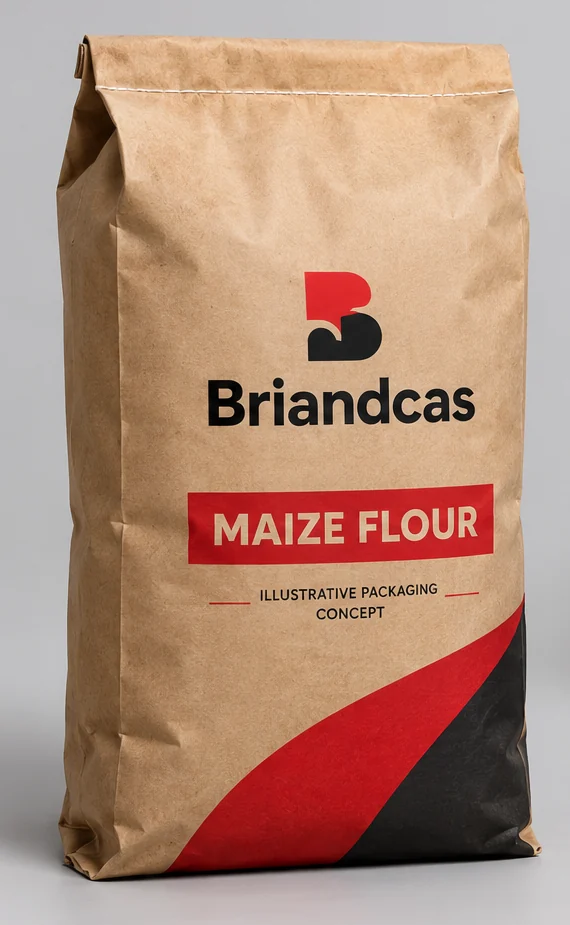
Kraft paper sack
Paper-based construction; may use multiple plies and, where required, a suitable liner or barrier. Confirm strength, moisture needs and food-contact suitability with the supplier.
Start with the physical package, then explore how the materials and artwork work together. These Briandcas-branded visuals are illustrative concepts, not approved production specifications.
Paper-based construction; may use multiple plies and, where required, a suitable liner or barrier. Confirm strength, moisture needs and food-contact suitability with the supplier.
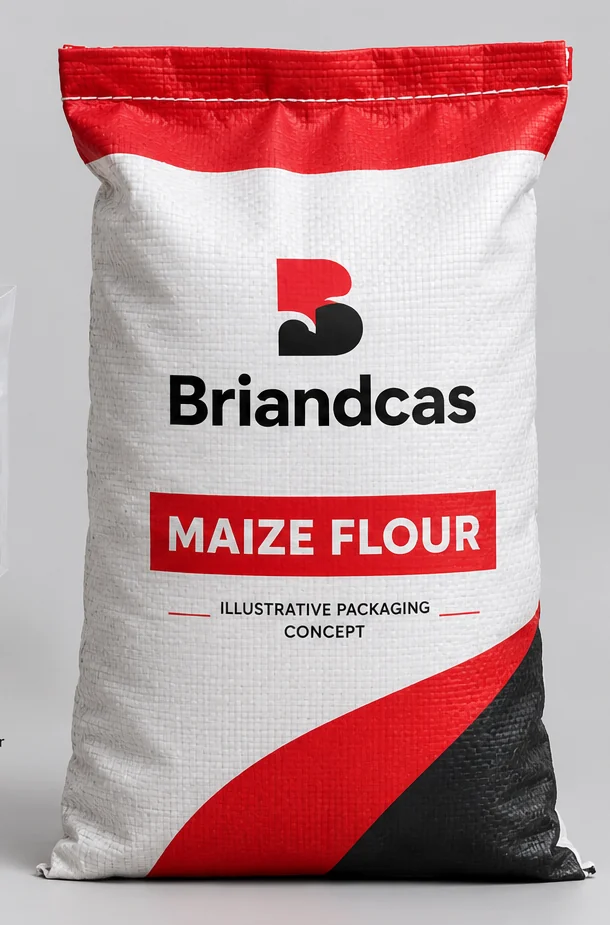
Woven fabric provides strength; optional lamination or an inner liner may be considered for print quality or additional moisture management. Validate the full structure and seals.
Important: printed branding in these concept images is an approximation. Use the official Briandcas SVG logo in final artwork, and have the packaging converter confirm dimensions, seams, material layers and print template before production.
Paper sacks built from one or more paper plies, sometimes combined with liners or functional layers for demanding dry-product handling. Kraft sacks use kraft paper as a principal paper component. Multiwall sacks use multiple plies arranged to meet strength, filling and handling requirements. They are used for a wide range of dry goods, but their performance depends on paper grades, ply layout, seams, closure method, and any liner—not simply the word “kraft”.
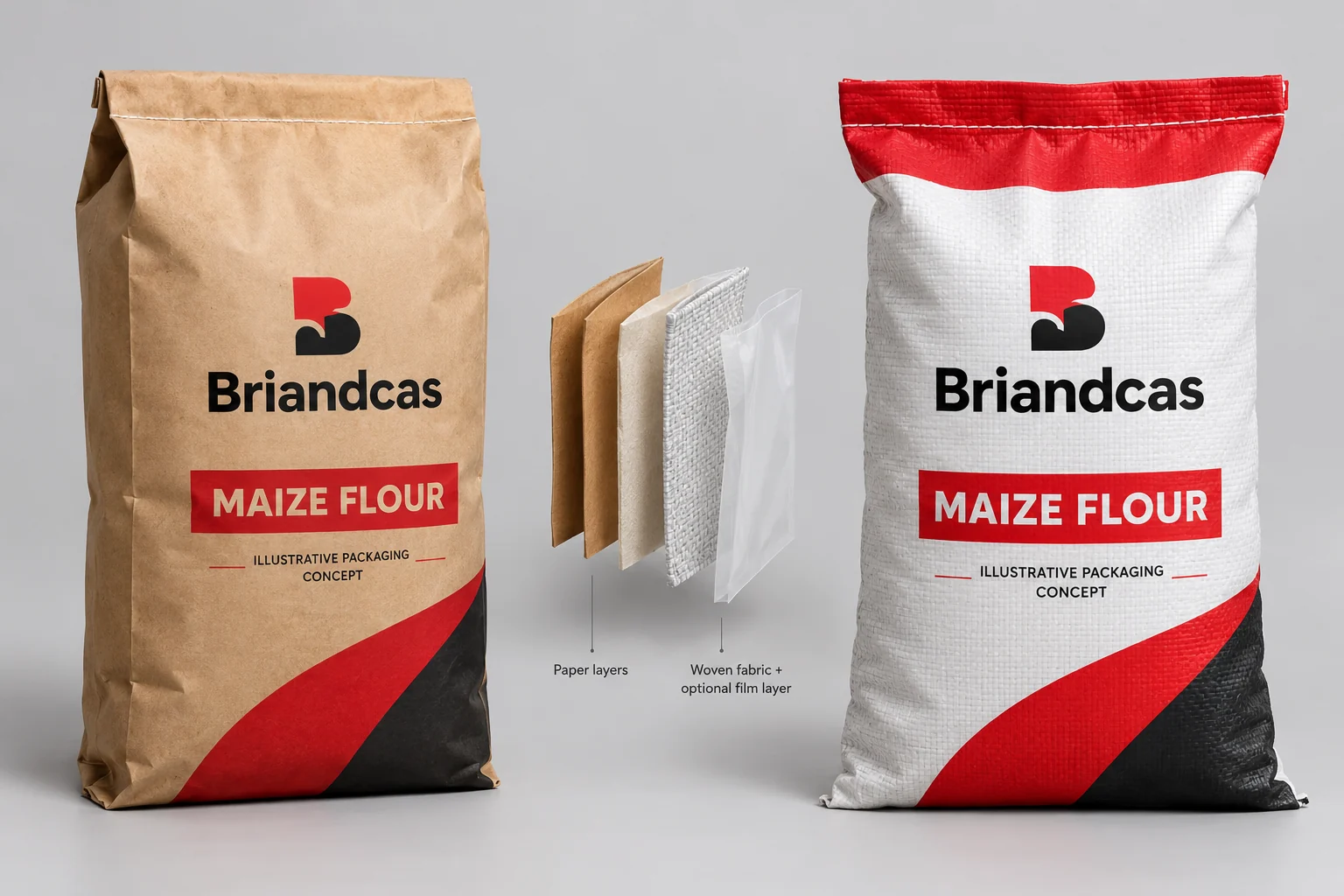
Schematic only; not to scale. Final material construction, dimensions, seals, closures and print zones must come from the selected packaging converter.
Kraft sacks use kraft paper as a principal paper component. Multiwall sacks use multiple plies arranged to meet strength, filling and handling requirements. They are used for a wide range of dry goods, but their performance depends on paper grades, ply layout, seams, closure method, and any liner—not simply the word “kraft”.
Common component roles are described below for learning. They are not a recommended bill of materials for every product or supplier.
| Component / layer | Typical role and specification questions |
|---|---|
| Kraft paper plies | Selected for tensile strength, stiffness, porosity and print requirements. |
| Optional film or barrier component | May address selected moisture or contamination risks; requires end-of-life and compliance review. |
| Adhesive / stitching | The joining method contributes to the overall integrity and must suit filling and handling. |
Flour, grain, animal feed, minerals, construction powders and other dry bulk products, when the specific sack design is appropriate.
Can be configured for different loads; large printable faces; paper-based structure; can be compatible with automated filling systems when designed for them.
Moisture resistance is construction-dependent; dust, seam failure and puncture risk must be managed; not every sack is suitable for food contact.
Define the product’s sensitivity to moisture, oxygen, light, aroma, contamination, impact or leakage where relevant.
Confirm filling equipment, speed, sealing method, machine compatibility, pack orientation and expected production volume.
Consider transport, stacking, shelf presentation, opening, carrying, reclosure and local end-of-life realities.
Request a sack drawing that identifies the front/back, side seam, valve or open mouth, closure and any no-print zones. Plan for batch coding and required safety/handling statements where relevant.
Not necessarily. Paper grades, ply orientation, seams, closure and conversion quality all contribute to performance.
Do not assume this. Liners, coatings, contamination and local recovery infrastructure can affect end-of-life options.
Only when the full structure, manufacturing controls and applicable food-contact requirements are suitable for the intended product.
This guide is educational and is not a substitute for packaging engineering, product testing, food-contact review or current regulatory advice. Confirm applicable Kenyan and destination-market requirements with the responsible product owner and qualified specialists.
Share the product, target pack size, filling method, reference images and converter specification. Briandcas can help scope the design and prepress requirements.