
Potential advantages
Distinctive shelf block; broad front and back panels; can offer a premium appearance; optional reclosure.
A structured flexible pouch with a broad base and folded panels for a box-like shelf profile. Flat-bottom pouches use a combination of front, back, side and bottom panels to create a more squared-off pack. Some constructions include a fin or back seal; others use a different sealing arrangement. The exact panel layout varies by converter and machine.
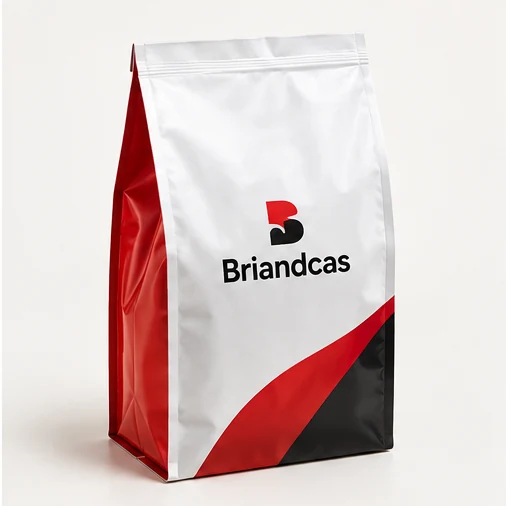
A flat-bottom pouch has a more box-like profile, with front, back, side panels and a defined base.
Use the mock-up to understand the shelf shape, then use the construction drawing below to study the panel transitions and seal areas. This is a conceptual visual, not a production sample or approved dieline.
Schematic only; not to scale. Final material construction, dimensions, seals, closures and print zones must come from the selected packaging converter.
Flat-bottom pouches use a combination of front, back, side and bottom panels to create a more squared-off pack. Some constructions include a fin or back seal; others use a different sealing arrangement. The exact panel layout varies by converter and machine.
Common component roles are described below for learning. They are not a recommended bill of materials for every product or supplier.
| Component / layer | Typical role and specification questions |
|---|---|
| Print / structural web | Provides graphics and mechanical support. |
| Barrier layer if needed | Selected to suit oxygen, moisture, aroma or light sensitivity; not all products need the same barrier. |
| Sealant layer | Creates the seals and must suit the product and filling line. |
Premium coffee, dry foods, grains, snacks, pet food and other products where a square profile and broad display panels are desirable.
Distinctive shelf block; broad front and back panels; can offer a premium appearance; optional reclosure.
Can use more material and more complex converting than a simple pillow pack; folds can distort graphics; stability still depends on fill and base design.
Define the product’s sensitivity to moisture, oxygen, light, aroma, contamination, impact or leakage where relevant.
Confirm filling equipment, speed, sealing method, machine compatibility, pack orientation and expected production volume.
Consider transport, stacking, shelf presentation, opening, carrying, reclosure and local end-of-life realities.
Request a panel map showing front, back, side gussets, bottom and seal zones. Avoid placing small text or fine rules across fold intersections.
Both may stand upright, but flat-bottom constructions typically create a more squared base and multiple defined panels. Supplier terminology can vary.
Not necessarily. Some folds, seals and machine-contact zones reduce usable print area.
Suitability depends on material structure, dimensions, seal design, fill weight and distribution testing.
This guide is educational and is not a substitute for packaging engineering, product testing, food-contact review or current regulatory advice. Confirm applicable Kenyan and destination-market requirements with the responsible product owner and qualified specialists.
Share the product, target pack size, filling method, reference images and converter specification. Briandcas can help scope the design and prepress requirements.